
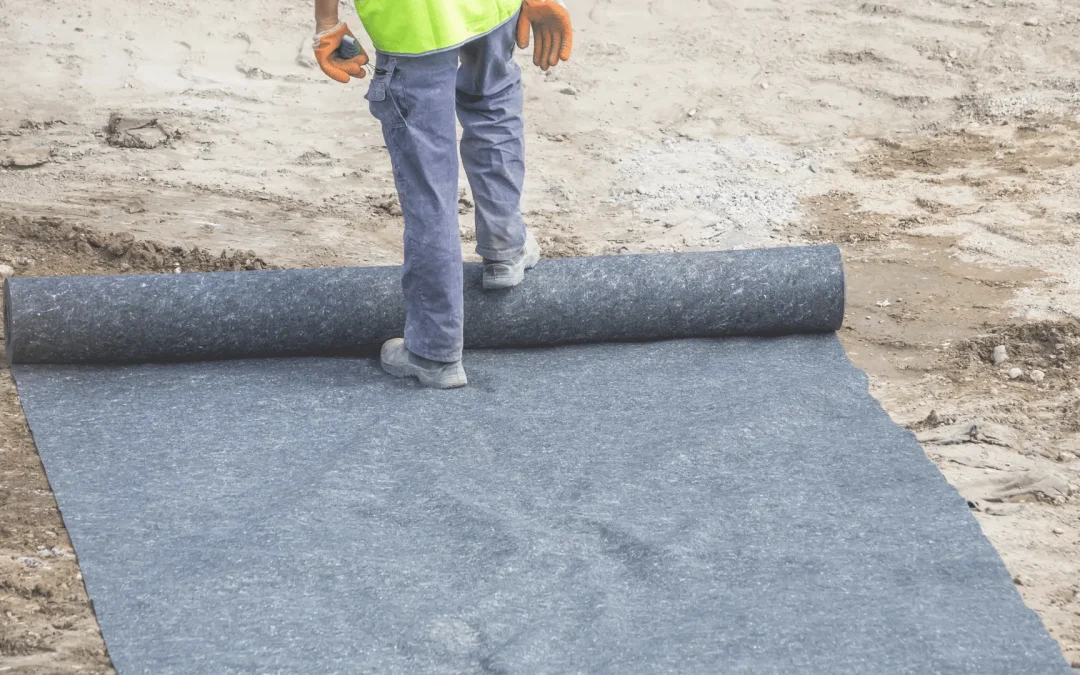
Since its introduction in the mid-20th century, geotextile fabric has transformed construction. This workhorse of a material is essential for soil stabilization, drainage, erosion control, and more. It reinforces foundations and evenly distributes weight. Whether it’s a roadbed or a retaining wall, woven and non-woven geotextiles have unique roles in many different projects. Their ability to control water flow and enhance structural integrity makes them indispensable for modern building. When contractors, engineers, and project planners understand the benefits and applications of geotextile fabric, they are better equipped. This knowledge helps them make informed choices that ensure sustainable and durable outcomes in their projects.
What is Geotextile Fabric?
1. Define Geotextile Materials
Geotextile fabric is a synthetic permeable textile used in construction for different purposes.
The key product types are woven, nonwoven, knitted, and other geotextile fabrics. Each type is made through different processes.
- Created by interlacing warp and weft threads, these fabrics offer high tensile strength and are ideal for load-bearing applications.
- Made from bonded fibres, they provide excellent drainage and filtration properties, making them suitable for erosion control.
- Produced by interlocking yarns, these materials combine flexibility with strength, often used in landscaping and civil engineering projects.
Their unique characteristics help determine the right geotextile for your construction requirements.
2. Explain Geotextile Structure
The woven geotextiles are created through a systematic procedure that involves warp and weft threads. This structure enhances strength and durability.
It is very effective for civil engineering projects, such as road construction and embankments. Their ability to withstand considerable loads while offering stability makes them a popular option in many applications.
Common uses of woven geotextiles include:
- Reinforcement of soil structures
- Separation between different soil layers
- Protection of underlying materials from erosion
The durability of woven fabrics provides a long-lasting and dependable material for harsh environments.
3. Discuss Geotextile Properties
Non-woven geotextiles are produced by orienting and bonding fibres mechanically, thermally, or chemically.
They can be produced in a range of thicknesses, which can be customized based on project needs.
The methods of bonding used play a part in how they perform for drainage and filtration.
The advantages of non-woven geotextiles include:
- Enhanced drainage capabilities
- Effective filtration of soil particles
- Versatility across multiple applications
These properties also make non-woven geotextiles essential in controlling the movement of water and preventing soil erosion.
Types of Geotextile Fabrics
Woven Geotextiles Overview
Woven geotextiles are made by interweaving textiles on a loom that creates a strong and consistent fabric.
These fabrics provide a few principal benefits in construction projects.
First, they add stability and structural support to the soil below. This reinforcement is essential in preventing erosion and ensuring the longevity of structures.
Woven geotextiles offer excellent durability, with a lifespan lasting as long as 20 years with proper treatment. They are cost-effective because they do not need to be replaced as often as other materials.
Non-Woven Geotextiles Overview
Non-woven geotextiles essentially fortify the load-bearing strength of the foundation. They distribute loads evenly across various layers of soil. This method is especially useful in regions with poor or soft soils.
Non-woven geotextiles can stretch over 50%. The elongation is superior and allows them to be more flexible and adaptable under stress compared to woven geotextiles, which stretch only 5% to 25%.
This property allows them to be used to stabilize unstable ground conditions, providing structures with continued integrity over time.
Compare Woven and Non-Woven
Both woven and non-woven geotextiles are critical to construction, as they help evenly distribute loads.
This function is critical for preventing the soil from deforming under heavy loads, causing the structure to fail.
In the case of road and pavement construction, these fabrics are used to effectively manage loads. They increase the overall performance and safety of the infrastructure.
You can also choose between woven and non-woven material, depending on your project needs. Woven options are known for their exceptional durability and tensile strength, whereas non-woven types are known for their flexibility and load distribution capabilities.
Benefits of Geotextile Fabric
Enhance Foundation Strength
Geotextile fabric is an important factor in prolonging construction structures.
It adds strength and stability when placed between two layers of soil or other materials. This installation preserves the integrity of foundations.
This makes the fabric resistant to environmental factors such as erosion and weathering, which can compromise structural integrity over time.
Geotextile fabric protects infrastructure from soil movement and instability, so buildings and roads are safe and durable.
Support Load Distribution
The versatility of geotextile fabric crosses construction applications.
It enhances the performance of civil engineering structures through enhancing load distribution. This makes it great for use on highways, residential streets, parking lots, and areas beneath driveways.
In agriculture and landscaping, geotextiles are just as useful, helping prevent soil mixing and enhancing permeability.
The wide-ranging benefits of this multi-functional material have transformed it into a multi-billion dollar industry.
Manage Water Flow
In road construction, geotextile fabric plays a key role in controlling the movement of water.
When used in roadbed construction, it enhances the stability and life of pavement.
The fabric helps manage moisture, which protects road surfaces from damage due to water build-up.
You can easily wrap French drains with geotextiles. They also work alongside other sub-surface drainage solutions to ensure efficient water drainage systems.
Increase Structural Durability
Geotextile fabric plays a role in building retaining walls. It stabilizes embankments and slopes while efficiently eliminating soil erosion inside these structures.
Technology has advanced rapidly such that geotextiles have become a reliable option for many construction projects. They offer durability and performance that builders can rely on.
Their ability to separate soil layers contributes to ground stabilization, making them indispensable in modern construction practice.
Applications of Geotextile Fabric
Roadbeds and Pavements
If you’ve never heard of geotextile fabric, there’s a good chance you’ve seen it; it’s pivotal in roadbed and pavement construction, especially its effective drainage solutions.
By allowing water to flow through and filtering out soil particles, it improves subsurface drainage performance.
This ability helps it direct the flow of water, so it doesn’t pool and cause structural damage.
Geotextile fabric is better than classic drainage methods, such as gravel or sand layers. It reduces the need for maintenance and increases the service life of road surfaces.
Retaining Walls and Embankments
When constructing retaining walls and embankments, the use of geotextile fabric provides substantial environmental benefits.
Its use helps promote sustainability for building by cutting back on raw materials needed.
By reducing soil structures, geotextile fabric reduces the environmental impact of construction projects while preserving natural landscapes.
It also helps manage water runoff — an important factor in stabilizing and preventing erosion around these structures.
Soil Stabilisation Techniques
Geotextile fabric is essential for soil erosion control and slope stabilisation. It serves as a barrier that prevents sediment loss when it rains or floods, saving precious topsoil.
Its uses include preventing erosion of coastlines and riverbanks, where it protects exposed areas from bad weather. Geotextile fabric strengthens weak soil types, which is a crucial support system for infrastructure. It also serves an important role in conserving the environment.
Drainage Solutions with Geotextiles
Using geotextile fabric supports sustainable construction by conserving resources and minimizing waste. It channels water away from vital areas and filters out pollutants; it helps create eco-friendly infrastructure. This new method cuts back on reliance on finite resources and keeps surrounding ecosystems intact. The inclusion of geotextiles in drainage systems, for example, is an effort to responsibly build.
Environmental Advantages of Geotextiles
Reduce Soil Erosion
Geotextile fabric is a crucial material in construction. It performs a number of functions: separation, filtration, reinforcement, sealing, and drainage.
These functions are crucial for maintaining the integrity of soil structures and preventing erosion. When you use geotextiles to separate the two soil types, you greatly reduce mixing. That avoids a wobbling ground situation.
Their filtration capabilities help manage water flow, preventing sedimentation in waterways and thus improving water quality. By minimising erosion, geotextiles play a huge role in successful projects while protecting the environment.
Promote Sustainable Construction
The geotextile fabric used in construction helps promote sustainability by not allowing various types of soil to mix.
This preservation of soil integrity is key to maintaining effective drainage systems, which are crucial to managing stormwater.
In addition, geotextiles have uses in landfill and road construction, where they prolong the life of infrastructure.
This longevity means you won’t need frequent repairs or replacements. This drastically reduces waste and the overall environmental footprint of construction.
A project’s environmental impact can be determined in part by choosing the right materials—with up to 80% of it coming from the materials used. That’s why geotextiles make so much sense—they’re a long-lasting fix.
Minimise Environmental Impact
Soil structures are reinforced with geotextile fabric to enhance tensile strength and stability.
In more challenging soil conditions, like areas prone to flooding or landslides, geotextiles provide strong stabilization.
Their durability reduces the amount of greenhouse gas emissions associated with construction projects because there are fewer repairs needed over time.
Offering a stable surface that helps limit sediment and debris reaching waterways, geotextiles protect critical aquatic ecosystems.
Overall, their ability to minimize waste through reuse or recycling further increases their positive environmental impact.
Key Functions of Geotextile Fabric
Material Separation
Next, you have to evaluate the type of soil that the project site has.
Each type of soil has its own particle size and characteristics, which will impact the geotextile’s performance.
For example, a rougher soil may need a thicker fabric for effective separation and filtration.
Next, think about the specific needs of your project.
Are you looking for a temporary solution or a long-term installation? The intended use will inform the material you choose.
Performance criteria like tensile strength, permeability, and durability should also be a part of your decision-making process.
These factors determine how well the geotextile will perform under any given condition and ensure that the geotextile meets the project’s specifications.
Stabilisation and Reinforcement
Different application areas require an excellent understanding of project specifications when selecting geotextiles for stabilization and reinforcement solutions.
Each application has specific requirements — for instance, road construction might require properties that differ from slope stabilization.
When you tailor the geotextile solution to meet these specific needs, project performance improves overall.
We cannot ignore compatibility with existing materials and structures.
The chosen geotextile needs to integrate seamlessly with components, such as aggregates or drainage, to work efficiently.
This compatibility helps prevent issues such as erosion or structural failure as time goes on.
Filtration and Drainage
The importance of quantifying soil conditions before choosing geotextiles.
Soil characteristics, including texture, moisture content, and compaction levels, directly affect every way geotextiles perform in these roles.
For example, if you have finer soils, you may need a fabric with smaller pore sizes to reduce clogging and allow water to pass through.
Conducting thorough site assessments during project planning offers valuable insights into soil behaviour and hydrology.
This information allows you to make informed decisions about the correct geotextile fabric to use.
Ultimately, it lengthens the life and effectiveness of your drainage layers and systems.
Selecting the Right Geotextile
Consider Project Requirements
Selecting geotextiles depends on the specific needs of your project.
Every project has specific needs based on its intended use. This may consist of filtration, drainage, separation, reinforcement, waterproofing, or protection. Knowing these functions will help you select the right kind of geotextile.
For example, when separation and permeability are both required, non-woven geotextiles are commonly the material of choice.
This knowledge guarantees that the fabric chosen fulfills the performance standards needed for it to be durable and effective over time.
Evaluate Soil Conditions
Soil conditions play a major role in determining which geotextile to use. You need to evaluate the soil type, moisture content, and stability before making a decision.
Different soils play with geotextiles; sandy soils, for example, may require different properties than clayey soils. You can determine the right type of geotextile that can withstand environmental factors and load stresses through thorough evaluation.
Understanding the soil tells us what’s going to be more prone to problems, like erosion or instability. This means we know what to look for in terms of materials to make sure we avoid these issues.
Assess Load and Fill Size
Load requirements are a key factor in determining the geotextile fabric.
The weight and size of fill materials directly affect how much load a geotextile must support.
When selecting a geotextile, consider the anticipated loads.
You should also consider the size of the fill you’ll use in your project. For example, heavier non-woven fabrics could be a better choice for heavy loads as they are tougher.
You need to know about weight classification for non-woven geotextiles.
These are typically rated by ounces per square yard, and knowing this can help you choose the right product for your project’s requirements.
Conclusion
Geotextile fabric is an important staple in modern construction. It offers many advantages that increase project efficiency and support sustainability. From enhancing soil stability to promoting efficient drainage, these materials serve multiple purposes and are often indispensable.
It’s very important to understand the various types of fabrics and their individual functions. If you know how to choose the right fabric, you can make smart decisions for your building projects. When you think about using geotextiles in your projects, don’t forget the environmental benefits they offer as well as their benefits to construction. Keeping up with this could make a big difference in the success of your upcoming projects.
If you’d like to learn more about geotextile fabric, reach out! You can also check out further resources here for details.
For more information about Geotextile for construction, please contact: Whatsapp/Mobile Phone : +62 811 1721 338 (Ms. Ais), or Email : info@urbanplastic.id.