
Getting to know about non woven landscape fabric can be a strong reason why you need to consider it. Especially for users who are heavily involved in landscape construction and agriculture. Although often less noticed, it turns out that this material has a very vital function in various applications. Let’s review in more detail.
Everything You Need to Understand about Non Woven Landscape Fabric
Simply put, non-woven landscape is a type of geotextile fabric that is made without using a weaving process. But through a fiber binding technique with the help of heat, pressure and special chemicals. This material is usually made of synthetic fibers such as polypropylene or polyester. So that it can provide high resistance to weather and degradation processes. Unlike woven landscape fabric which has a woven structure, non-woven has a softer and more flexible texture.
The main characteristic of non-woven fabric is its ability to filter water without losing its durability. The pore structure in this material allows water and air to still pass through the soil surface. Of course, while remaining effective in holding soil particles so that they are not washed away by water. In addition, this material is also known for its resistance to microorganisms and chemicals. They are also resistant to UV exposure and harsh climates. Generally, the thickness of non-woven landscape fabric ranges from 100 to 500 grams per square meter. Where the selection of thickness or size depends on the specific needs of the project being carried out.


Utilization of Non Woven Landscape Fabric in Various Fields
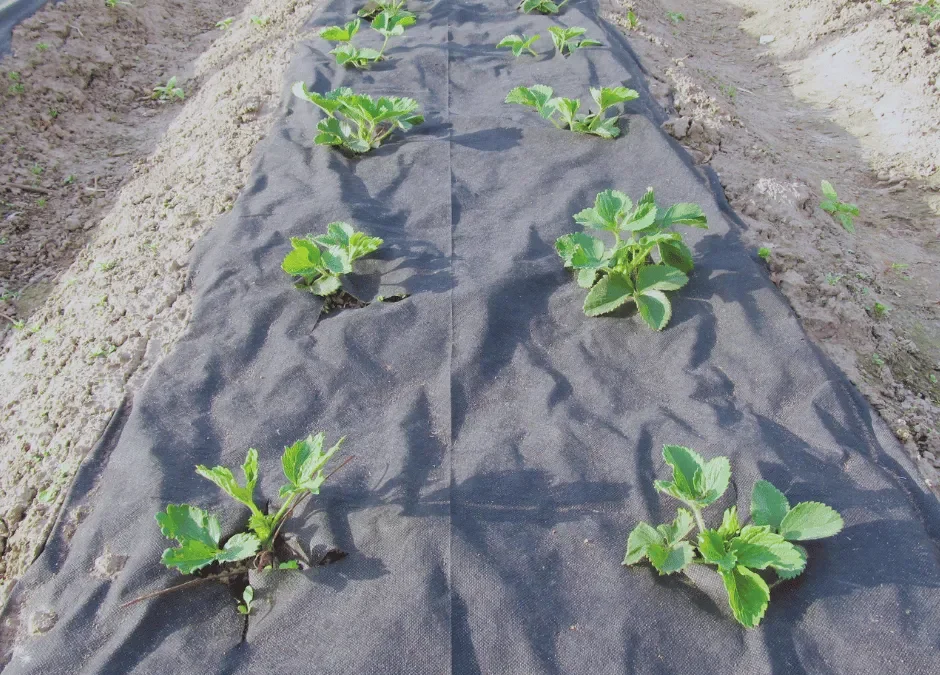
In general, the use of non-woven fabric is very broad. Including projects that require erosion control. Such as making gardens, installing footpaths, or constructing retaining walls. One of the biggest uses is in agriculture and plantations. Where non-woven fabric is often used to reduce weed growth. When this fabric is installed on the ground before planting, sunlight cannot penetrate the soil. So that weeds have difficulty growing.
In this way, farmers and gardeners can reduce the use of herbicides. Which means it is more environmentally friendly and saves maintenance costs. Another advantage is its ability to increase the efficiency of water use. In irrigation systems, the use of non-woven fabric can help maintain soil moisture longer by reducing water evaporation. This is all very beneficial for plants that require stable soil conditions. Especially in areas with high temperatures or dry conditions.
The use of non-woven fabric in the construction sector is no less important. This fabric functions for the installation of footpaths, highways or even railroads. As a soil stabilization layer, non-woven fabric helps distribute the load evenly. Thus preventing land subsidence or cracks in the road surface. In addition to its use on dry land, non-woven fabric is also effective in underwater drainage projects. For example, on the banks of rivers or ponds. Because the material is resistant to decay and does not easily decompose in water.
So, non woven landscape fabric is a material that has a myriad of significant benefits. Its ability to control erosion, improve drainage, prevent weeds and improve water efficiency makes it an economical solution for a wide range of needs. By understanding its characteristics and benefits, users can be wiser in choosing and implementing them in their projects. Choose quality products from Urban Plastic that are useful not only innovative. However, also focusing on sustainability. Thus, it has a positive impact on the environment.
For more information about Geotextile for Gardening please contact: Whatsapp/Mobile Phone: +62 811 1721 338 (Ms. Ais) or Email : info@urbanplastic.id.